
How to Stop Diabetic Foot Pain at Night
Last Updated: October 30, 2026
Quick Summary
To stop diabetic foot pain at night, follow a consistent 15-minute bedtime routine: inspect your feet, wash and dry them, moisturize, stretch gently, and wear soft seamless socks. Keep feet comfortably warm, never use heating pads directly, and check bedding for wrinkles that press on toes.
- Peripheral neuropathy is the most common cause of diabetic nerve pain at night.
- Inspect feet nightly in good light, including soles and between toes.
- Never use heating pads, hot water bottles, or electric blankets directly on feet.
- Skip moisturizer between the toes, where extra moisture can lead to infection.
- Get a new cut, blister, or sore that isn't healing checked the same day.
Table of Contents
- Why Diabetic Foot Pain Gets Worse at Night
- A Step-by-Step Bedtime Routine to Calm Diabetic Foot Pain
- Home Remedies for Diabetic Foot Pain That Are Safe to Try
- Building a Daily Diabetic Foot Care Routine
- Red Flags That Need Same-Day Medical Care
- Choosing Recovery Tools for Your Nighttime Comfort
- Frequently Asked Questions
Why Diabetic Foot Pain Gets Worse at Night
Diabetic foot pain often gets worse at night because nerve damage, reduced circulation, and the quiet of bedtime leave nothing to distract you from the discomfort.
If you're searching for how to stop diabetic foot pain at night, know this: the pain isn't in your head or random. It follows a pattern, and understanding it is the first step toward sleeping better.
Nerve Damage and Circulation Behind Nighttime Pain
Peripheral neuropathy is nerve damage that affects the feet and hands, and it's the most common cause of diabetic nerve pain at night. High blood sugar over time injures the small nerves in your feet.
Poor circulation makes it worse: reduced blood flow means nerves get less oxygen and nutrients. Together, nerve damage and weak circulation drive much of the nighttime foot pain people with diabetes experience.
Diabetic Nerve Pain at Night: What Changes After Dark
What changes after dark is your environment, not your nerves. During the day, movement, noise, and activity mask mild discomfort. At night, you lie still. The room is quiet.
Lying flat can also affect circulation and fluid shifts in your legs, and cold feet under the covers can sharpen nerve pain, so pain seems to spike the moment your head hits the pillow.
A Step-by-Step Bedtime Routine to Calm Diabetic Foot Pain
A consistent bedtime routine is the most reliable way to reduce diabetic foot pain at night. The goal is to protect skin that may not feel injury and to remove small irritants, cold sheets, wrinkled bedding, tight socks, that can make discomfort feel sharper once you lie still.
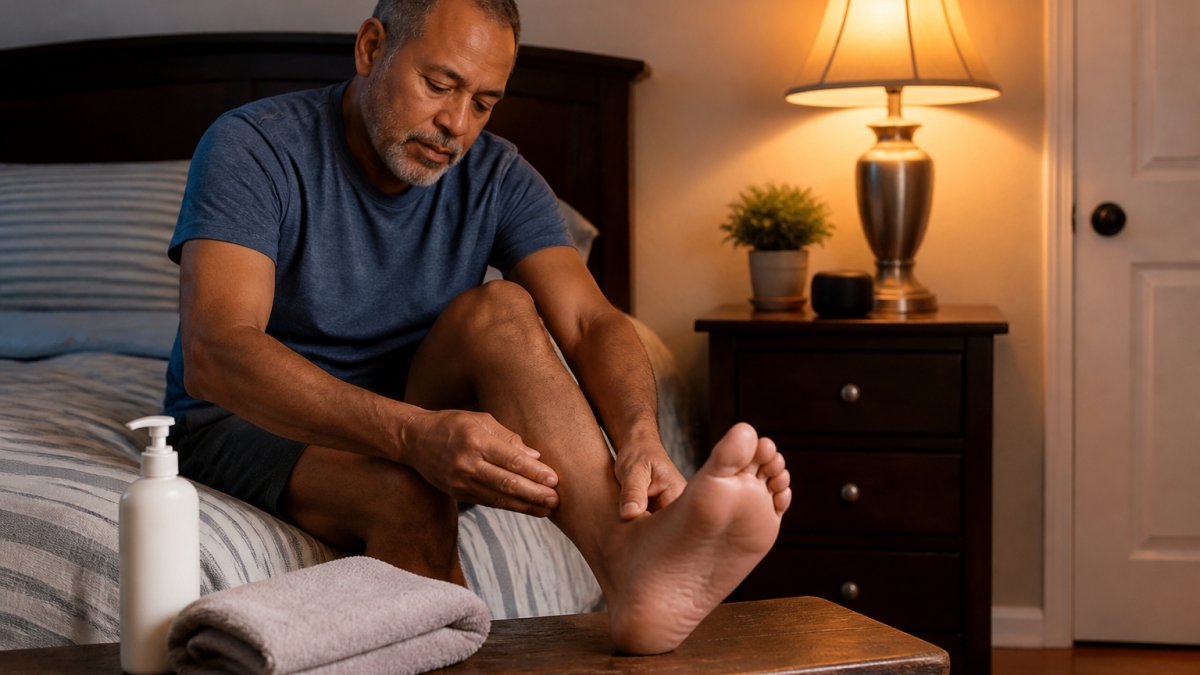
The Routine, With Timing and Purpose
Set aside about 15 minutes. Work through these steps in order:
- Inspect your feet in good light (2-3 minutes). Use a mirror or ask a household member to check the soles, heels, and between the toes for cuts, blisters, redness, swelling, or hot spots. Because neuropathy can hide a developing wound, this is the single most important step.
- Wash with mild soap and lukewarm water (3-5 minutes). Test the water with your hand or elbow first; hot water is a burn risk when sensation is reduced.
- Pat dry completely, especially between the toes (1-2 minutes). Trapped moisture there is a common starting point for fungal infection and skin breakdown.
- Moisturize dry skin (1 minute). Use a plain, fragrance-free cream and skip the spaces between the toes; cracked heels are painful and an entry point for infection.
- Do gentle calf and ankle stretches (3-5 minutes). Slow ankle circles, a seated calf stretch with a towel around the ball of the foot, and pointing and flexing move blood and reduce stiffness. Stretch to mild tension, never to pain.
- Put on soft, seamless socks (under a minute). They should be loose enough not to leave marks; avoid elastic tops that press into the ankle.
- Check the bedding before you get in. Smooth wrinkles, shake out crumbs, and loosen tucked sheets that press on your toes. A light blanket over the feet, or a foot tent, can reduce friction and pressure that trigger pain.
- Keep the room comfortably warm, but not hot. Cold feet sharpen nerve pain; overheating causes sweating and irritation. Soft socks in bed are safer than a heating pad.
Troubleshooting the Most Common Nighttime Problems
- Feet feel cold under the covers: add soft socks or a light blanket, never a heating pad, hot water bottle, or electric blanket directly on the feet, reduced sensation means you may not feel a burn developing.
- Sheets feel painful against the toes: try a foot tent or loose blanket, and check for rough seams or tags.
- Pain spikes the moment you lie down: this is the quiet-room effect, with nothing to distract you, nerve signals feel louder. A short, calm wind-down (dim lights, slow breathing, gentle stretching) may make that feeling easier to tolerate.
Done nightly, this routine takes about 15 minutes and can become a habit that supports foot care and helps many people settle.
Here is the nightly routine in order, with the time each step takes and why it matters.
| Step | What to do | Time | Purpose |
|---|---|---|---|
| 1 | Inspect feet in good light, including soles and between toes | 2-3 minutes | Most important step; neuropathy can hide a wound |
| 2 | Wash with mild soap and lukewarm water | 3-5 minutes | Hot water is a burn risk when sensation is reduced |
| 3 | Pat dry completely, especially between the toes | 1-2 minutes | Trapped moisture leads to fungal infection and skin breakdown |
| 4 | Moisturize dry skin, skipping between the toes | 1 minute | Cracked heels are painful and an entry point for infection |
| 5 | Do gentle calf and ankle stretches | 3-5 minutes | Moves blood and reduces stiffness; stretch to mild tension |
| 6 | Put on soft, seamless socks | Under a minute | Loose enough not to leave marks; avoid elastic tops |
| 7 | Check the bedding before getting in | Not stated | Smooth wrinkles and loosen tucked sheets that press on toes |
| 8 | Keep the room comfortably warm, but not hot | Not stated | Cold feet sharpen nerve pain; soft socks beat a heating pad |
Home Remedies for Diabetic Foot Pain That Are Safe to Try
Home comfort measures for diabetic foot pain focus on comfort and skin protection, not quick fixes. Check with your care team before trying any of them.
- Gentle movement and stretching before bed
- Soft, well-fitting socks
- Elevating your legs for a short time in the evening
Heat, Cold, and Self-Massage When Sensation Is Reduced
Reduced sensation changes the safety rules for heat, cold, and massage.
Watch out: never use heating pads, hot water bottles, or electric blankets directly on your feet.
For cold, wrap an ice pack in a towel and limit it to short periods. Never place ice directly on your skin.
Self-massage can help circulation and relaxation. Try a gentle foot rub, or roll your foot over a tennis ball or a cloth-wrapped frozen water bottle.
Choosing the Best Cream for Diabetic Foot Pain
A plain, fragrance-free moisturizer is a common choice for keeping dry skin soft. No cream cures nerve pain, so be skeptical of products that promise to "fix" neuropathy.
- Fragrance-free formulas to reduce irritation
- Urea or glycerin to hold moisture in dry skin
- No added dyes or harsh ingredients
Apply moisturizer after washing and drying your feet. Skip the area between your toes, where extra moisture can lead to infection. Ask your care team before using any medicated cream.
Building a Daily Diabetic Foot Care Routine
A daily diabetic foot care routine supports foot health and is commonly recommended to help reduce the risk of skin problems. It will not erase nerve pain.
- Check your feet daily for cuts, blisters, and redness, using a mirror for the soles.
- Wash and dry carefully, especially between the toes.
- Wear protective footwear, even indoors, never go barefoot (Diabetes Foot Care: Tips for Healthy Feet & Preventing Complications).
According to the American Diabetes Association foot care guidance, daily foot checks and proper footwear are central to preventing serious foot problems. Small habits, repeated daily, make the biggest difference.
Red Flags That Need Same-Day Medical Care
Some foot symptoms need same-day medical care, not home remedies. Reduced sensation can hide a serious problem: a wound, infection, or circulation change can develop with little or no pain. That's why the red flags below are organized by urgency rather than by how much they hurt.
Call Your Care Team the Same Day
- A new cut, blister, or sore that isn't healing, or any wound that looks deeper than a surface scrape
- Redness, warmth, or swelling that is spreading on your foot or ankle
- Any sign of infection, such as pus, a bad smell, or increasing tenderness
Seek Emergency Care Now
- A foot that feels cold and looks pale, blue, or mottled, a possible sign of sudden loss of blood flow
- Sudden severe pain, especially with a color or temperature change
- A wound that is rapidly worsening, or skin that is breaking down quickly
Why Reduced Sensation Changes the Rules
With peripheral neuropathy, the pain signal that would normally warn you about a blister, burn, or infection may be blunted or absent. A small blister can go unnoticed, become infected, and be discovered only at a routine check. That is exactly why daily foot checks matter, they substitute your eyes for the sensation you may not have.
What to Bring and What to Expect
When you call or go in, bring:
- The date the problem started and whether it has changed
- Your most recent blood glucose readings
- A list of your medications, including any creams or devices you've used
At assessment, a clinician will typically check circulation (pulses and skin color), test sensation, and inspect the wound. Depending on findings, they may clean and dress the wound, prescribe antibiotics, order imaging or blood flow tests, or refer you to a foot specialist.
Watch out: when in doubt, get it looked at the same day. With reduced sensation, waiting for pain to tell you something is wrong is not a safe strategy.
Choosing Recovery Tools for Your Nighttime Comfort
Some people use recovery tools as part of a broader comfort routine, but they are not a cure for nerve damage and do not replace medical care.
- Is it designed for people with diabetes and reduced sensation?
- Is it safe to use at home without supervision?
- What does the return policy look like if it doesn't help?
Talk with your care team before starting any new device, especially if your circulation issues are severe. For current product details and pricing, check the Precision Diabetes Hub website or request a quote.
Frequently Asked Questions
Why does diabetic foot pain get worse at night?
At night there are fewer distractions, so nerve pain becomes more noticeable. Circulation also slows when you are still, and blood glucose shifts can affect nerve sensitivity. For many people with peripheral neuropathy, burning and tingling in the feet feel sharpest when lying down. Keeping a consistent bedtime routine, checking blood glucose before bed, and using safe comfort measures can reduce how much nighttime foot pain disrupts sleep.
What is the best cream for diabetic foot pain?
There is no single best cream for everyone. Look for a moisturizer formulated for dry, sensitive skin and apply it after washing and drying your feet, avoiding the spaces between the toes. Some products contain lidocaine or capsaicin, which can dull nerve pain, but check with your clinician first, especially if you have reduced sensation or open skin. Never apply cream to a wound or ulcer, and stop using any product that causes burning or irritation.
Can home remedies for diabetic foot pain help me sleep?
Gentle measures can help. A short foot soak in warm, not hot, water, light self-massage with a tennis ball, and elevating your feet can ease discomfort before bed. Because neuropathy reduces sensation, test water temperature with your elbow and avoid heating pads or hot water bottles you cannot feel. Some people find it helpful to pair home comfort measures with blood glucose management and a daily foot care routine.
When should I seek medical care for diabetic foot pain?
Contact your clinician promptly if you notice a new wound, blister, or sore that is not healing, redness, swelling, warmth, or drainage, or any blackened tissue. Seek same-day care for sudden severe pain, a foot that feels cold or looks pale or blue, or signs of infection such as fever or chills. These can signal an ulcer or infection that needs urgent treatment, and early care protects your foot.
Nighttime foot pain is frustrating, but a steady routine can make your evenings calmer. If you're ready to build comfort into your nights, Precision Diabetes Hub offers education and wellness devices designed for people managing diabetes-related challenges. Explore our recovery tools and foot care guidance to find what fits your needs. Get started with Precision Diabetes Hub and take the first step toward better nights.