How to Improve Circulation in Legs: 8 Steps That Help
Last Updated: October 31, 2026
Quick Summary
You can improve circulation in legs with frequent low-impact movement, such as seated ankle pumps and calf raises every hour. Elevating legs above heart level, limiting salt, staying hydrated and wearing well-fitted compression socks also help reduce swelling and heaviness.
- Do 10 to 15 seated ankle pumps two or three times a day, or hourly at your desk.
- Walk for about 30 minutes most days, which can be split into 10-minute sessions.
- Elevate legs above heart level for 15 to 20 minutes, two or three times a day.
- Limit salt, since extra sodium makes the body hold onto water.
- Seek care right away for sudden swelling in only one leg, which can signal a blood clot.
Table of Contents
- Why Leg Circulation Slows Down With Diabetes
- Best Exercises for Diabetic Leg Circulation
- How to Reduce Leg Swelling With Diabetes
- Compression Socks for Diabetes and Circulation Support
- Booking Your Circulation and Recovery Consultation
- Frequently Asked Questions
Why Leg Circulation Slows Down With Diabetes
Poor circulation in the legs is one of the most common problems people with diabetes report, and understanding why it happens is the first step toward ways to improve circulation in legs. Over time, high blood sugar can damage the small blood vessels and nerves that keep blood moving to the feet (What Is Diabetic Neuropathy?).
Circulation is the flow of blood through the arteries, veins and capillaries. When that flow slows, the legs and feet can feel cold, heavy, numb or tingly.
A few factors often make the problem worse:
- Long periods of sitting or standing with little movement
- Nerve damage that dulls the feeling of cold, pressure or injury
- Smoking, which narrows blood vessels
Many people with diabetes find that small daily habits make a real difference in how they improve circulation in legs. The steps below focus on movement, swelling control and support tools you can use at home.
Best Exercises for Diabetic Leg Circulation
Movement is one of the simplest ways to get blood flowing in the legs. Muscles in the calves act like a pump, pushing blood back up toward the heart against gravity.
Gentle exercise works well for most people with diabetes. Start slowly, build up over time, and check with your healthcare provider before starting a new routine, especially if you have foot ulcers, peripheral neuropathy, or heart problems.
The Seated Office Routine (For Desk-Bound Days)
Many people with circulation concerns spend long periods sitting at a desk. Blood can pool in the lower legs during long periods of sitting, which may cause heaviness and swelling.
Ankle pumps (seated):
- Sit with your feet flat on the floor.
- Point your toes up toward your shins, then point them down.
- Repeat 10 to 15 times per foot, two or three times a day, or once every hour at your desk.
Seated calf raises:
- Keep your feet flat and press through the balls of your feet to lift your heels slightly.
- Hold for two seconds, then lower slowly.
- Repeat 10 to 15 times.
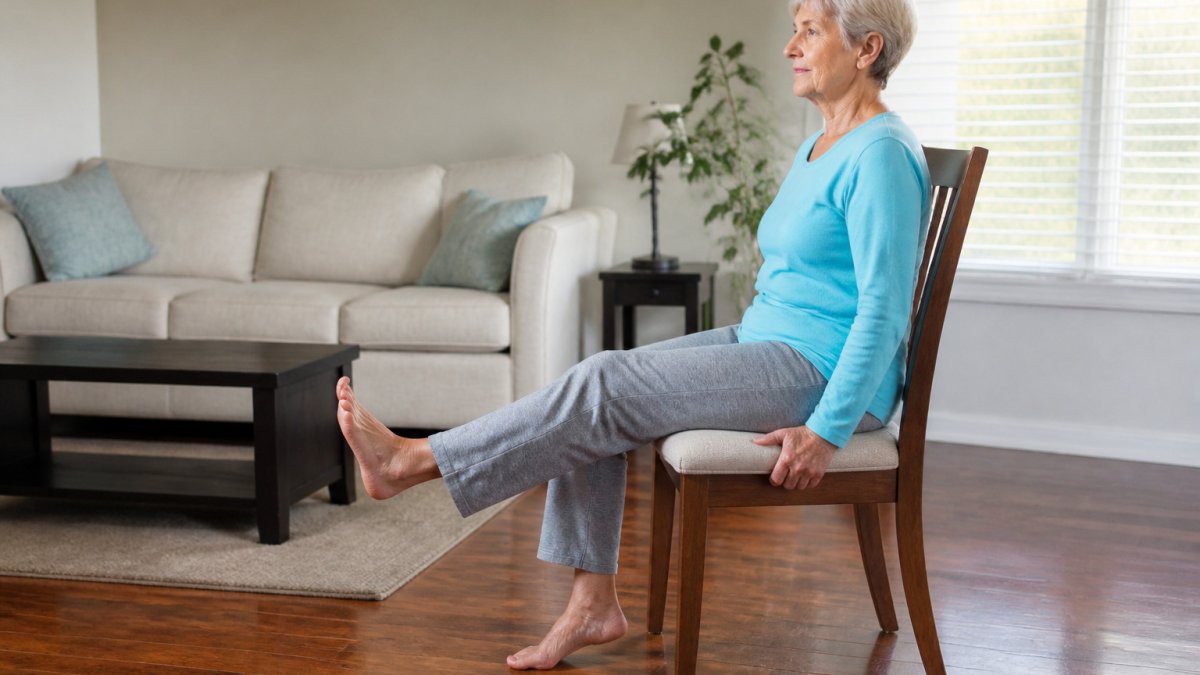
Seated leg extensions:
- Extend one leg straight out in front of you and hold for five seconds.
- Lower and repeat 10 times per leg.
Standing calf raises:
- Stand behind a sturdy chair and hold the back for balance.
- Rise slowly onto the balls of your feet.
- Hold for two seconds, then lower slowly.
- Repeat 10 to 15 times.
A practical rule: set a phone reminder every hour to stand, do 10 ankle pumps, and take a two-minute walk to the water cooler. That single habit addresses both the sedentary gap and the hydration point below.
Low-Impact Cardio and Stretching
Walking, cycling, and swimming support healthy blood flow without stressing the feet. Aim for about 30 minutes most days, broken into 10-minute sessions if needed.
Stretching helps tight calves and hamstrings that can restrict blood flow. Try a gentle calf stretch by leaning forward against a wall with one leg back and heel down; hold for 20 to 30 seconds on each side.
Heat vs. Cold After Exercise
The practical distinction: use heat before activity to relax tight muscles and encourage blood flow, and use cold after activity only if there is swelling or inflammation. Heat is generally not recommended over areas with reduced sensation from neuropathy, because you may not feel a burn. Keep any heating pad on a low setting and limit it to 15 to 20 minutes.
How Often and How Hard
Consistency beats intensity. A reasonable starting schedule is:
- Daily: 10 minutes of ankle pumps and seated calf raises spread through the workday.
- Most days: a 20- to 30-minute walk, broken up as needed.
- After activity: 5 minutes of calf and hamstring stretching.
Stop and talk to your provider if exercise causes sharp pain, chest pain, or a new foot wound.
The routines below are the ones the article describes for keeping blood moving in the legs.
Air Relax Plus AR-3.0 Leg Recovery System – Compression Boots →
| Exercise | How often | Key point |
|---|---|---|
| Seated ankle pumps | 10 to 15 reps, 2-3 times a day or hourly | No equipment needed |
| Seated calf raises | 10 to 15 reps | Hold for two seconds |
| Seated leg extensions | 10 reps per leg | Hold for five seconds |
| Standing calf raises | 10 to 15 reps | Hold a chair for balance |
| Walking or low-impact cardio | About 30 minutes most days | Can be split into 10-minute sessions |
| Calf and hamstring stretching | 20 to 30 seconds per side | Do after activity |
How to Reduce Leg Swelling With Diabetes
Swelling in the lower legs and ankles, edema, is common with diabetes and often worsens at the end of the day. The mechanism is straightforward: when you sit or stand for long periods, fluid is pulled downward by gravity, and the calf muscles are not contracting enough to push it back up. The result is puffiness, heaviness, and sometimes tight, shiny skin.
Simple habits can keep fluid from building up.
Elevation Done Right
Elevating your legs above heart level for 15 to 20 minutes, two or three times a day, lets gravity drain fluid back toward the torso. For elevation to help drain fluid, your legs need to be higher than your heart, not just propped on a footstool. Elevating the legs above heart level is the goal; sitting in a recliner with feet up may not achieve this, because the heart can still be above the legs.
Salt, Hydration, and Movement
- Limit salt. Extra sodium causes the body to hold onto water. Processed foods, canned soups, and restaurant meals are the biggest hidden sources.
- Stay hydrated with water throughout the day unless your doctor has advised otherwise. Counterintuitively, dehydration can make the body retain fluid.
- Move regularly so the calf muscles can pump fluid back up the legs. Even standing up every hour helps.
Compression: Socks vs. Devices
Compression garments apply graduated pressure, firmest at the ankle, lighter higher up, to push fluid back toward the heart. For everyday swelling, lighter compression socks are usually enough; firmer stockings are often recommended for specific medical conditions.
Some people also use compression devices for a home-based recovery routine. The Air Relax Plus AR-3.0 Leg Recovery System applies sequential pressure to the legs and is designed for home recovery routines.

When Swelling Is a Red Flag
Other signs to report promptly: swelling that does not improve with elevation, skin that is hot or weeping, or a new wound on the foot or ankle. People with diabetes should check their feet daily for cuts, blisters, or color changes, since reduced sensation can hide early problems (Diabetes & Foot Problems).
A Simple Daily Swelling Routine
- Morning: put on well-fitted compression socks before getting out of bed, when swelling is lowest.
- Midday: elevate legs above heart level for 15 to 20 minutes.
- Afternoon: do 10 ankle pumps every hour at your desk.
- Evening: elevate again for 15 to 20 minutes and check your feet for any skin changes.
Track what helps in a simple note on your phone, and bring it to your next appointment so your provider can adjust the plan.
Compression Socks for Diabetes and Circulation Support
Compression garments apply graduated pressure to the legs, which helps push blood back toward the heart. Many people with diabetes use compression socks or stockings to ease swelling and heaviness during the day.
Compression socks come in different strengths. Lighter options suit everyday wear, while firmer ones are often recommended for specific medical conditions.
For people who want more than socks, wireless compression wraps add another option. The HiDow ThermoAir Wave Compression Wraps 2.0 combine air compression, adjustable heat and vibration in cordless wraps designed for the calves.

Booking Your Circulation and Recovery Consultation
If leg circulation problems keep returning or you're not sure which steps fit your situation, a professional can help. A consultation gives you time to talk through your symptoms, goals and questions in one place.
Precision Diabetes Hub offers a Circulation & Recovery Consultation with a Nurse Practitioner.

Before your appointment, think about:
- When your symptoms started and how they change during the day
- Any medications you take for diabetes or blood pressure
- Which activities make your legs feel better or worse
Getting a clear plan early can help you protect your legs and feet while you work on better circulation.
Frequently Asked Questions
How does diabetes affect blood circulation in the lower extremities?
Diabetes can damage small and large blood vessels over time, and high blood sugar can also contribute to nerve damage in the feet and legs. Together these changes can reduce blood flow to the lower limbs and make tingling, numbness, swelling or slow-healing sores more likely. People with diabetes should have their feet examined regularly by a clinician, and any new swelling, color change or wound should be reported promptly to a healthcare professional.
What simple exercises can I do at home to improve leg blood flow?
Ankle pumps, calf raises, seated leg lifts and short walks are simple options that use the calf muscles to move blood back toward the heart. Many people start with two or three short sessions a day and build up gradually. Stop if you feel chest pain, sharp pain in the calf, or unusual shortness of breath, and check with your care team before starting a new routine.
How do compression socks help with leg circulation and swelling?
Graduated compression socks apply firmer pressure at the ankle and lighter pressure higher up the leg, which helps push fluid back up toward the heart and can reduce swelling during the day. Fit matters, so measure your legs and choose a size that does not roll or dig in. Because compression can be unsafe with some arterial conditions or foot wounds, ask a clinician whether compression is appropriate for you before wearing it.
When should I see a doctor about poor circulation in my legs?
See a doctor promptly if you notice a leg or foot that is cold, pale or blue, a wound that is slow to heal, sudden swelling in one leg, pain at rest, or numbness that is spreading. These can signal a serious problem that needs evaluation. People with diabetes should also schedule regular foot and vascular checks so changes are caught early rather than after symptoms become severe.